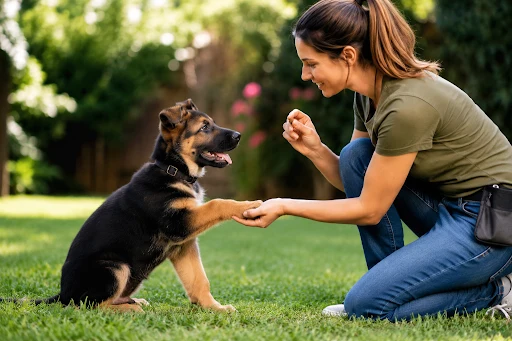
Bringing home a German Shepherd puppy in Wonder Lake gives you an early opportunity to establish habits that can shape everyday behavior as your dog grows. Training does not need to begin with complicated commands, because young puppies learn best when expectations are clear, lessons are brief enough to hold their attention, and your responses remain consistent from one day to the next.
Your puppy will naturally test boundaries while becoming familiar with a new home, so patience matters just as much as repetition. Rather than expecting immediate obedience, focus on helping your puppy understand which behaviors receive a positive response and which choices should be redirected.
Build Training Into Everyday Routines
Begin with skills that fit naturally into your daily schedule, because frequent practice makes learning easier without turning every interaction into a formal training session. Teaching your puppy to respond to its name is a useful starting point, since gaining attention will make later commands easier to introduce and reinforce.
House training should also follow a predictable routine, so your puppy gradually understands where bathroom breaks should happen. Taking your puppy outside after waking or eating can create a pattern that becomes easier to recognize over time, while calm praise after a successful trip helps reinforce the desired behavior.
Young German Shepherd puppies often learn quickly, although their attention can shift just as quickly when something more interesting appears nearby. Keeping lessons focused and ending them before frustration develops can make training feel rewarding rather than exhausting for both you and your puppy.
Set Boundaries With Consistent Responses
Chewing and jumping are common puppy behaviors, so your goal should be to guide those instincts rather than expecting them to disappear immediately. If your puppy begins chewing furniture, redirecting attention to an appropriate toy teaches a clearer lesson than reacting harshly after the behavior has already happened.
Consistency across your household is equally important because different rules can make expectations difficult for a young dog to understand. If one person allows jumping while another discourages it, your puppy may struggle to recognize which response is expected, which can slow progress and create unnecessary confusion.
Introduce New Experiences At A Comfortable Pace
Early training also includes helping your puppy become comfortable with ordinary situations around your home and community in Wonder Lake. Gradual exposure to unfamiliar experiences can build confidence when you give your puppy enough time to observe and adjust instead of pushing interaction too quickly.
You can also practice calm handling so future grooming and veterinary visits feel more familiar rather than completely new. Progress may vary from week to week, but steady practice and clear communication will give your German Shepherd a practical foundation for continued training as maturity develops.